

IonQ Partners with Florida LambdaRail on Secure Network Project
IonQ and Florida LambdaRail agreed to develop a quantum-safe network in Florida, starting with a 100-mile corridor connecting research institutions.The project will use quantum key distribution (QKD) over existing fiber infrastructure to enable secure communications and detect interception attempts.The initiative aims to expand statewide and support quantum infrastructure, research collaboration, and ecosystem development.
Read More

State of the Global Quantum Industry 2026
2025 was a positive year for the quantum technology industry, marked by continued technical progress contributing to market growth, and increases in public and private investment, pure-play quantum companies, and workforce. The United Nations’ designation of 2025 as the International Year of Quantum Science and Technology and the 2025 Nobel Prize in Physics being awarded for quantum physics experiments helped elevate the industry by promoting international collaboration and encouraging policymakers and institutions to highlight quantum technologies in their innovation agendas. This report reflects the global quantum technology industry as of the end of 2025, and underscores that the industry is maturing and gaining strategic importance worldwide.
Read More

Quantum Communications in Russia Poised for Commercial Launch
By 2026, Russia’s national rail operator plans to open its quantum links to third party carriers, offering carriers unprecedented security and laying the groundwork for a new era in protected data transport.
Read More

Senate committee approves quantum reauthorization bill with 7 amendments
A markup in the Senate Commerce Committee outfitted the National Quantum Initiative Reauthorization Act to support near-term quantum application development, cybersecurity migration timelines and scaling testbeds for quantum sciences and technologies.
Read More
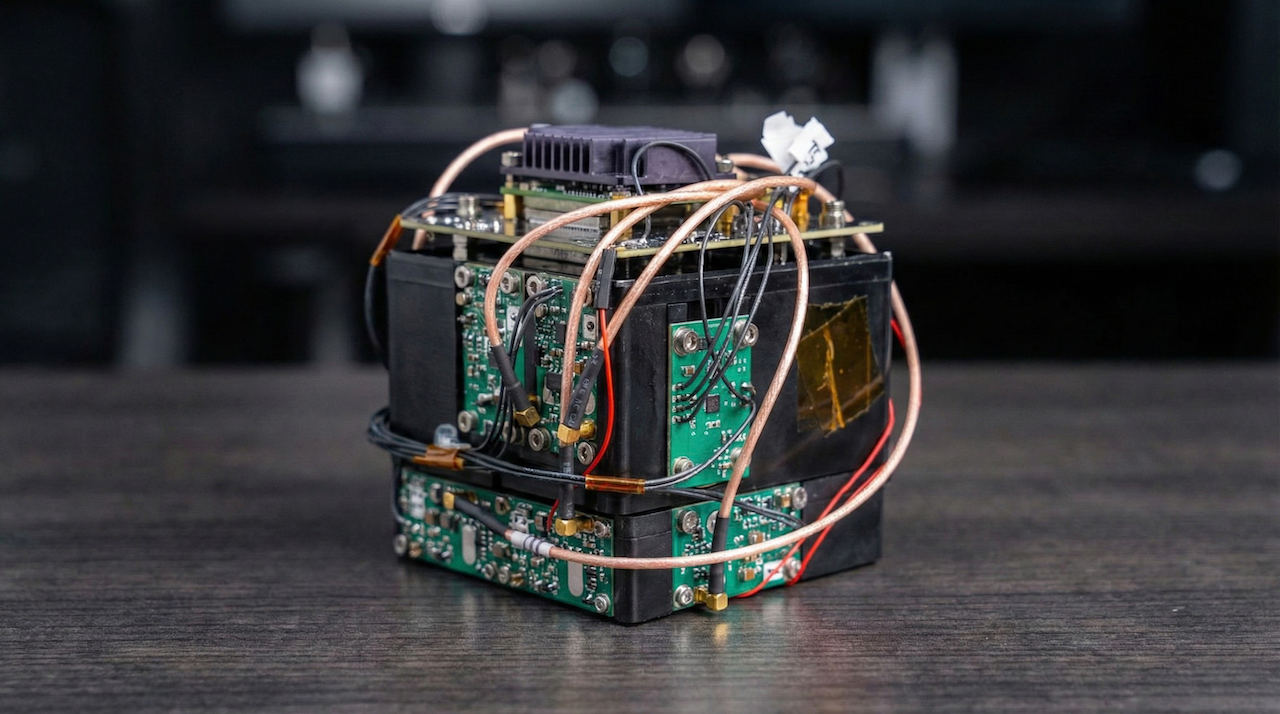
A Quantum Payload Reaches Orbit, Commercial Quantum Communication Is on the Horizon
A CubeSat carrying Qubitrium’s QubitCore payload successfully entered orbit aboard SpaceX’s Transporter-16 mission to test whether entangled photons can be reliably generated and measured in space.The mission validates a fully integrated, CubeSat-compatible quantum system designed to implement entanglement-based quantum key distribution, marking a shift from government-led experiments to commercially deployable hardware.Engineers will analyze data over time to assess system performance in real space conditions, including detector degradation, radiation effects, and the stability of entanglement correlations.The deployment demonstrates early movement toward a modular supply chain for space-based quantum technologies, positioning standardized payloads as a foundation for scalable quantum communication infrastructure.
Read More
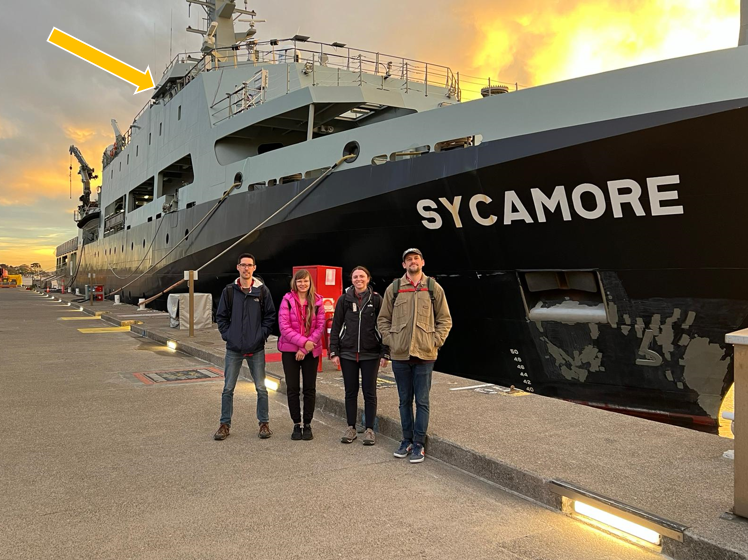
Next-Generation Atomic Clock Successfully Tested at Sea
Researchers from the University of Adelaide demonstrated a portable optical atomic clock operating at sea for the first time, maintaining laboratory-level precision in a real-world maritime environment.The device uses laser-cooled ytterbium atoms to achieve highly accurate timekeeping and ran continuously aboard a Royal Australian Navy vessel despite vibration, motion and temperature fluctuations.The study indicates portable atomic clocks could support navigation without GPS, improve telecommunications synchronization and enhance scientific applications such as radio astronomy, with further field deployments planned.
Read More
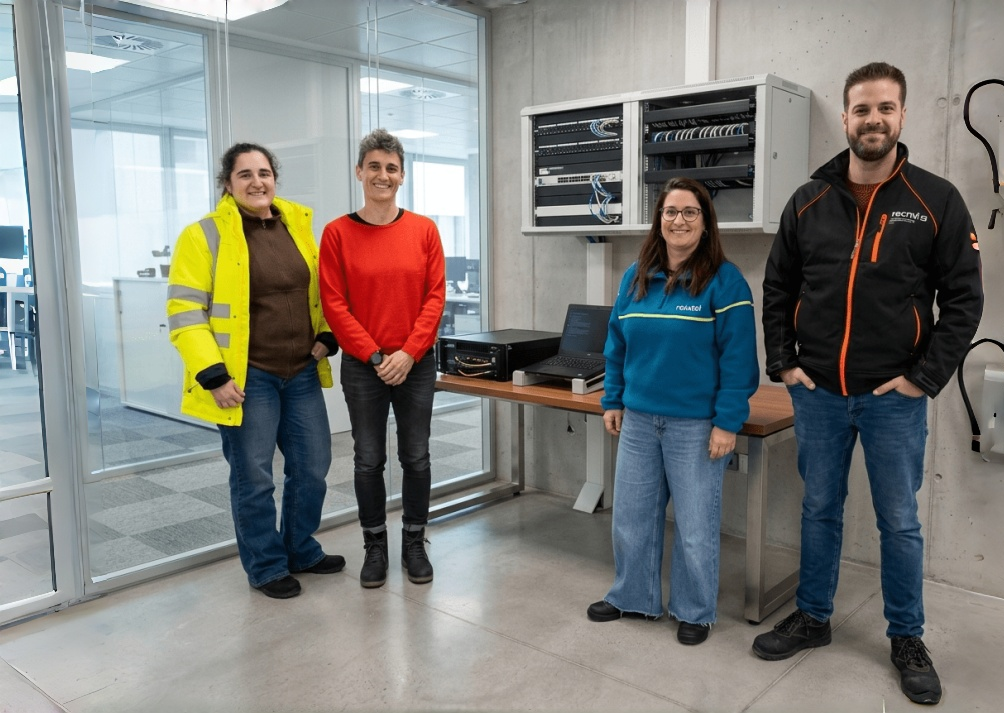
Elewit and TECNALIA successfully test 50 km quantum communications to advance towards a smarter power grid
Through environmental, communications, application, and network testing, they confirm that link distance and environmental conditions do not affect quantum key exchange equipment.
Read More

QDG Summit: 13 Nations Boost Secure Quantum Technology
Delegates from thirteen nations convened in London to solidify international collaboration on secure quantum technology development, following a summit hosted by the United Kingdom. The fifth meeting of the Quantum Development Group (QDG), comprised of countries including Australia, Canada, France, Germany, and the United States, focused on bolstering research security, investment, and supply chain resilience for this rapidly advancing field. Members agreed to deepen cooperation across these three priority areas to support trusted international collaboration and the safe development of quantum technology.
Read More

UK Launches SPOQC Satellite for Quantum Communications Research
Insider Brief:The UK-led SPOQC CubeSat mission has launched to test space-based quantum communications and support development of global quantum-secure networks.The satellite will transmit quantum signals to a ground station in Edinburgh, enabling experiments on different quantum communication methods.The project brings together UK universities and research institutions to advance secure communications and strengthen national quantum capabilities.
Read More
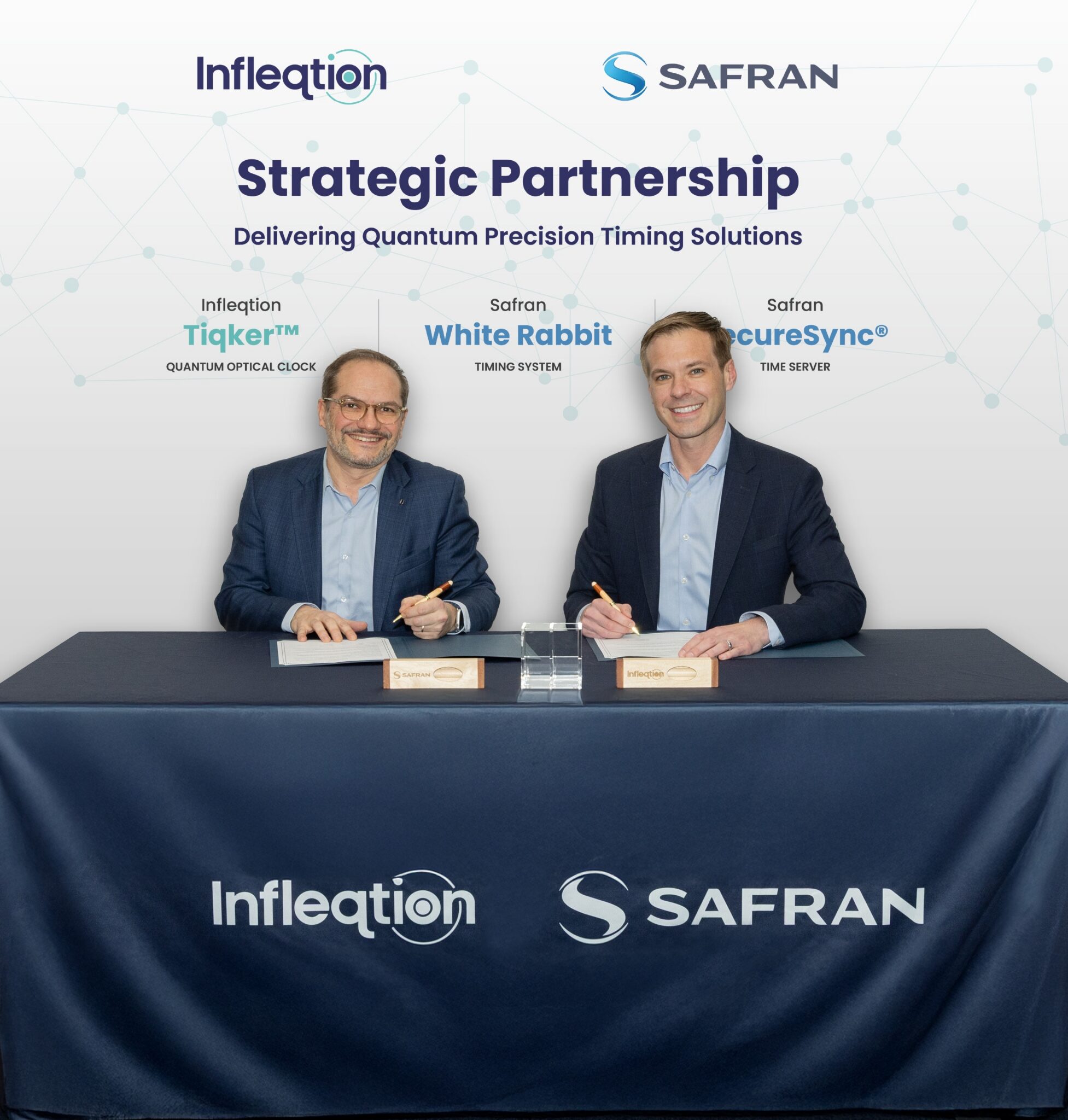
Infleqtion Delivers Quantum Precision Timing for Mission-Critical Systems
A validated advanced solution now available to customers worldwide across defense, telecommunications, and critical infrastructure sectors
Read More